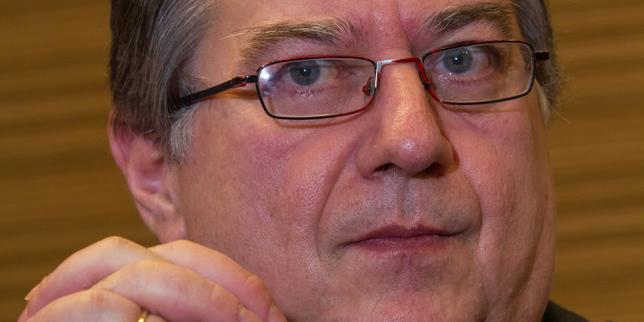
The machinery of European governance often runs on the invisible labor of technocrats. When one of those architects passes away, the headlines rarely capture the weight of their behind-the-scenes influence. The recent death of Serge Guillon marks the loss of a foundational figure in French and European administration, a man who spent decades steering the complex mechanics of EU policy coordination.
If you followed French European policy over the last thirty years, you ran into his name or felt the results of his structural adjustments. He didn't chase elected office. Instead, he operated in the engine room of the state.
Inside The Engine Room Of The SGAE
To understand why his passing matters to public administration, you have to look at what he actually did. From 2012 to 2014, Serge Guillon served as the Secretary-General for European Affairs, known in France as the SGAE. This body acts as the central clearinghouse for all French positions within the European Union.
Think about what that entails. Every regulation, agricultural subsidy, trade dispute, and environmental directive coming out of Brussels has to cross through domestic administrative friction before France takes a stance. Guillon sat at that exact crossroads.
He had to align the Ministry of Finance, the Ministry of Foreign Affairs, and domestic sector ministries into a single, cohesive national mandate. It's a brutal job. It requires a rare mix of legal precision, bureaucratic stamina, and political antenna. Guillon possessed all three in abundance, having built his career as a high-ranking civil servant and economic controller.
Shaping Future Decision Makers
Beyond his tenure at the helm of the SGAE, Guillon shaped how a generation of leaders understood the European project. As the pedagogical director of the Cycle des hautes études européennes, or CHEE, he trained senior executives, high-ranking officials, journalists, and trade unionists on the practical realities of EU decision-making.
Most people view the European Union as an abstract, distant monster in Brussels. Guillon treated it as a craft to be mastered. He drilled into his students that European policy isn't something that happens to France; it's something that French actors must actively build, negotiate, and contest from the inside.
He brought real-world operational experience to the classroom. He didn't teach textbook theory. He taught how dossiers actually move across desks when midnight compromises are being hammered out in Council working groups.
The Legacy Of Quiet Statecraft
Public discourse tends to celebrate loud politicians who score soundbites on television. Yet, the actual resilience of a democracy relies heavily on quiet professionals who keep the administrative machinery humming without seeking applause.
Serge Guillon was part of that vanishing breed of French republican civil servants. They view the state not as a tool for personal ambition, but as a continuity project that demands absolute technical rigor.
When you look at the current challenges facing European integration—from industrial sovereignty to cross-border crisis management—the frameworks that national governments use to coordinate responses were often drafted or refined by people like him.
His career reminds us that the European Union is only as strong as the administrative talent member states deploy to run it. As institutions evolve to meet new geopolitical shocks, the institutional memory left by practitioners like Serge Guillon remains an indispensable anchor.