Thousands are dead. Entire southern regions look like ghost towns. Now, international legal watchdogs are asking a terrifying question about Israel and Lebanon.
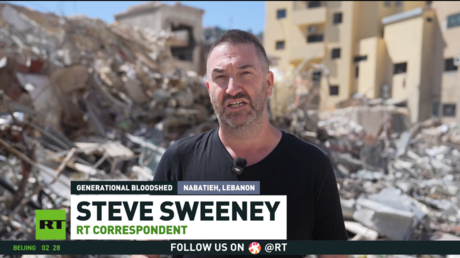
Let's cut through the political noise. Official figures show that over 4,300 people have been killed in Lebanon since the latest military escalation began in early March. More than 250 children and 130 medical professionals are among the dead. When cities like Nabatieh face repeated bombardments and agricultural ministries report 56,000 hectares of devastated farmland totaling over $1 billion in losses, the conversation shifts instantly. It moves from standard military conflict to the grim threshold of genocide accusations.
You need to understand what international law actually requires to prove these claims. Under the 1948 Genocide Convention, proving genocide requires establishing a specific intent to destroy a national, ethnic, racial, or religious group, either in whole or in part. Critics point to high civilian casualties, the systematic targeting of infrastructure essential for civilian survival, and aggressive political rhetoric. Organizations like the Lemkin Institute for Genocide Prevention and Doctors Against Genocide argue that the military campaign aims at the very foundations of life for Lebanon's Shia communities.
On the other side, Israel flatly denies these allegations. Its official stance insists that operations target Hezbollah, the Iran-backed armed group, rather than any specific civilian or religious population. Military commanders and government figures maintain that the destruction is an unavoidable consequence of fighting an embedded militia that operates inside densely populated civilian areas. Yet, incendiary remarks from high-ranking officials—such as Israeli Finance Minister Bezalel Smotrich comparing the fate of Beirut's Dahiya district to the devastation seen in Gaza's Khan Yunis—fuel the legal and moral debate across international human rights circles.
Why the Agricultural Collapse Changes Everything
War is rarely just about falling bombs. It's about starving the future.
When you ruin over 56,000 hectares of agricultural land, you destroy generations of economic independence. Farmers in southern Lebanon can't plant crops. Olive groves that took decades to mature lie burned to charcoal. The Lebanese Agriculture Ministry estimates direct sector losses exceeding $1 billion, creating an artificial famine risk and long-term economic displacement that will take decades to fix.
Human rights investigators look closely at this systematic economic ruin. When an entire region's food and water supply systems face systemic collapse, legal experts argue it goes beyond collateral damage. It fits the pattern of making life unsustainable for a targeted population.
The Stalled Diplomacy Trap
A US-brokered framework agreed upon back in June promised an end to the bloodshed. The plan looked solid on paper. It called for a progressive Israeli withdrawal from southern Lebanon, immediate deployment of the Lebanese Army, and the disarmament of armed groups like Hezbollah.
So why are people still dying?
Implementation stalled immediately. Neither side trusted the enforcement mechanisms. Hezbollah refused immediate unilateral disarmament while Israeli jets still filled the airspace, and Israel refused to halt operations while rocket fire occasionally crossed the border. This diplomatic paralysis leaves civilians trapped in the crossfire with nowhere safe to run.
What Comes Next for International Accountability
The legal battle over Lebanon won't end on the battlefield. International courts move slowly, but documentation accumulates daily. Human rights monitors are recording every destroyed hospital, every dead medic, and every public statement made by political leaders.
Whether these actions meet the strict legal definition of genocide will be debated in international tribunals for years. What remains indisputable right now is the sheer human catastrophe unfolding on the ground. Communities are shattered, economies are leveled, and thousands of innocent lives are gone. The world watches, but for the people living through the ruins of southern Lebanon, justice feels entirely out of reach.