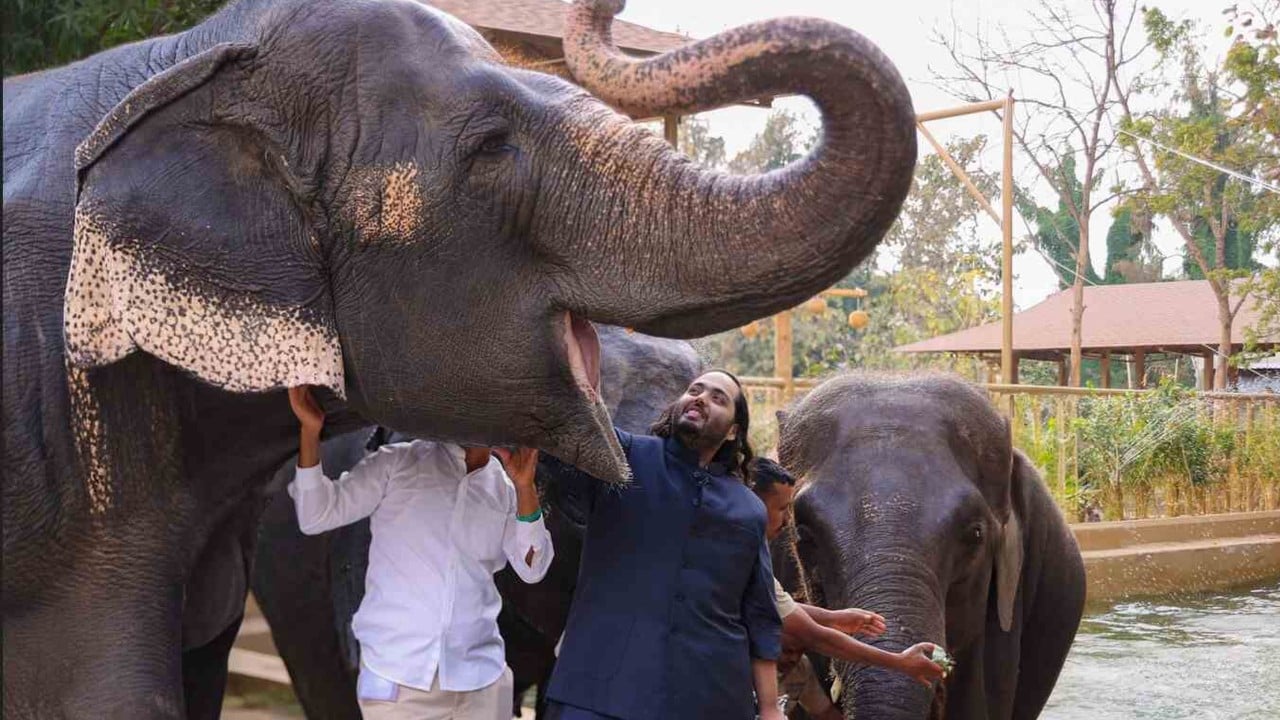
When a historic British higher education institution decides to hand out a high-profile sustainability title to an oil billionaire's son tied to a massive private zoo, people are going to notice. Newcastle University recently awarded Anant Ambani a professorship of practice in sustainability. Almost immediately, the academic community, conservationists, and internal staff pushed back hard.
Anant Ambani, the 31-year-old executive director of Reliance Industries and heir to a vast fossil fuel fortune, received the honor in September during a ceremony in the university's King's Hall. Newcastle pointed to his work with Vantara—a sprawling 3,500-acre private wildlife rescue initiative in Gujarat, India—and his corporate role in green energy transitions. Critics didn't buy it. Instead of celebrating academic achievement, the appointment has triggered a massive row over corporate influence in higher education and the real-world credibility of billionaire-backed conservation projects.
The Backlash From Academics and Environmentalists
You do not have to look far to find prominent figures questioning the sanity of this decision. Renowned Indian historian and environmentalist Ramachandra Guha did not mince words when discussing the choice. He pointed out that dozens of soil scientists, ecologists, and water conservation experts have dedicated their lives to environmental protection without getting a fraction of this institutional recognition.
Internal opposition was just as fierce. Professor Matt Perry, chair of the Newcastle University and College Union branch, confirmed that staff members formally objected, raising deep environmental concerns. Meanwhile, Lyla Mehta from the Institute of Development Studies at the University of Sussex warned that sliding public funding leaves universities vulnerable to corporate capture. Institutions meant to question power are instead handing out academic legitimacy to the ultra-wealthy.
What is Vantara and Why is it Controversial?
To understand why this appointment caused such an uproar, you have to look at Vantara itself. Backed by the Ambani family, the massive 1,400-hectare facility in Jamnagar houses over 150,000 animals, including hundreds of lions, leopards, and crocodiles. Proponents praise it as a revolutionary rescue and rehabilitation center, netting Ambani accolades like the Global Humane Award.
However, the shadow of controversy hangs heavy over its operations. An investigation by the German newspaper Süddeutsche Zeitung previously alleged that numerous animals arrived via opaque trade networks from countries like the Democratic Republic of the Congo. A subsequent fact-finding mission by CITES, the UN body regulating endangered species trade, indicated that some import permits were likely forged and warned that massive private intake facilities might inadvertently stimulate illegal wildlife trafficking.
Vantara and the Ambani family have consistently denied any wrongdoing, emphasizing that their core mission is strictly rescue and rehabilitation. Last month, the facility announced an operational "reset," appointing a former CITES head to oversee procedures and pausing all wildlife imports until June. Even so, tying a British university's academic reputation to a facility facing such intense scrutiny looks like a massive strategic misstep.
The Corporate Funding Trap in Higher Education
Public universities across the UK and the rest of the world are starving for cash. Tuition caps, inflation, and shrinking state support mean administrators constantly chase wealthy donors and corporate partners. When a family worth an estimated £90 billion enters the picture, cash-strapped universities often abandon caution.
This creates a dangerous conflict of interest. When an oil conglomerate heir—whose family fortune is built on fossil fuels—is crowned as a leader in sustainability, the line between genuine environmental stewardship and corporate greenwashing blurs completely. Critics argue that handing out honorary academic titles to corporate titans undermines the very purpose of independent scientific research.
Universities should act as independent watchdogs, not PR channels for mega-corporations. If higher education institutions want to maintain any shred of public trust, they need to stop trading their academic credibility for billionaire cash and start listening to the researchers and scientists on their own payrolls.