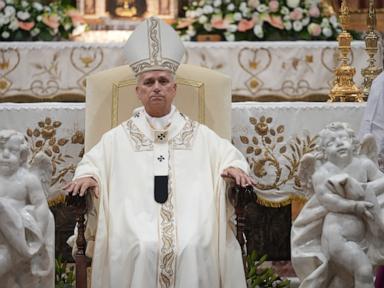
Pope Leo XIV is heading straight into a constitutional minefield. When he touches down in France for his upcoming four-day pastoral visit, he won't just find historic cathedrals and enthusiastic crowds. He'll find a nation that has deliberately and legally moved away from traditional religious morality.
France operates under a strict, unyielding form of secularism known as laïcité, anchored by a 1905 law that completely separates church and state in public life. But the friction goes much deeper than administrative separation. In 2024, the French National Assembly enshrined abortion as a guaranteed constitutional right. More recently, lawmakers gave final approval to legislation allowing adults suffering from incurable, terminal illnesses to receive lethal medication to end their lives.
These legal realities run completely contrary to core Catholic doctrine. The Vatican teaches that human life must be vigorously defended from the exact moment of conception until natural death. Because of this stark divide, the official motto chosen for the papal trip carries heavy theological weight: "That the world may have life."
It's a deliberate theme chosen by French bishops with the Pope's blessing. It highlights human dignity, putting the defense of life front and center. But how will that message resonate in a country that recently expanded access to assisted dying and abortion?
The Complex Reality of Modern French Catholicism
You might assume that a secularized country would ignore a papal visit entirely. Reality looks a bit more complicated. French church organizers expect roughly one million people to turn out to see the pontiff during his travels through Paris, Lourdes, and Metz.
That massive turnout mirrors what happened when Pope Leo visited Spain earlier this year and drew a seven-minute standing ovation inside the country's parliament. Skeptics often miscalculate the religious pulse of Europe. Beneath the surface of a aggressively secular state, a distinct counter-trend is quietly taking root.
Consider the numbers on adult baptisms. Over 13,000 adults were baptized at Easter in France, marking a trend where adult conversions have more than tripled since 2016. Many of these new converts are young, conservative adults drawn to traditional forms of worship, including the Latin Mass.
At the same time, we shouldn't overstate a spiritual revival. Demographers point out that these conversion numbers are a modest rebound compared to the massive generational drop-off. In 1980, France recorded over 513,000 infant baptisms. By 2024, that number plummeted to 186,000. The children of practicing Catholics simply aren't carrying on the tradition at scale, leaving the institutional church fighting to maintain relevance.
Confronting the Clergy Abuse Crisis at Lourdes
Pope Leo can't avoid internal church scandals while touring the country. His itinerary includes a stop at Lourdes, one of the most famous Christian pilgrimage sites in the world, known globally for its association with the sick and miraculous physical healings.
Yet Lourdes brings unavoidable baggage. The Vatican recently took the unusual step of confirming ahead of time that the Pope will privately meet with seven survivors of clergy sexual abuse. This group notably includes one individual who was an adult at the time of the abuse, marking a growing recognition of abuse dynamics beyond minors.
The French Catholic Church has spent years grappling with a brutal reckoning. An independent report published in 2021 estimated that roughly 330,000 children suffered abuse over a 70-year period by an estimated 3,000 priests and church employees. While critics have debated the report's exact methodology, French bishops established an independent compensation system that has already recommended payouts exceeding 20 million euros.
In Lourdes, the physical reminders of this dark chapter are hard to miss. Bishop Jean-Marc Micas previously ordered church mosaics crafted by Rev. Marko Rupnik—who is currently on trial in a Vatican court over psychological and sexual abuse allegations involving dozens of women—covered up entirely to protect victims from further distress. Pope Leo steps directly into this tense local battleground.
A Diplomatic Balancing Act
Beyond domestic French policies and internal church reform, Pope Leo brings a broader international agenda to Europe. On his first day in Paris, he is slated to visit UNESCO to advocate for robust regulation of artificial intelligence. His recent encyclical, Magnificent Humanity, warns tech developers to slow down and prioritize human dignity over rapid commercial expansion—a stance that frequently puts him at diplomatic odds with major global governments pushing for aggressive AI dominance.
His trip concludes in Metz, the birthplace of Robert Schuman, who helped lay the foundations for European integration. There, Leo will join other faith leaders at a regional conference on peace, addressing the ongoing war in Ukraine and the fracturing geopolitical landscape.
The Pope is placing himself right in the middle of the most contentious debates of our time. He's talking about the sanctity of life to a nation that legalized assisted dying. He's preaching about human dignity while dealing with the fallout of historic institutional abuse. He's championing traditional ethics inside a proudly secular republic.
Watch how the crowds respond, because this visit will test whether an ancient institution can still command attention in a modern, secular world that has largely decided it no longer needs the church's permission to write its own laws.
Pope Leo XIV Praises Catholics Who Lead Church in New Directions
This video provides relevant context on Pope Leo XIV's overarching global message regarding human dignity, life, and the evolving direction of the Catholic Church.
http://googleusercontent.com/youtube_content/1