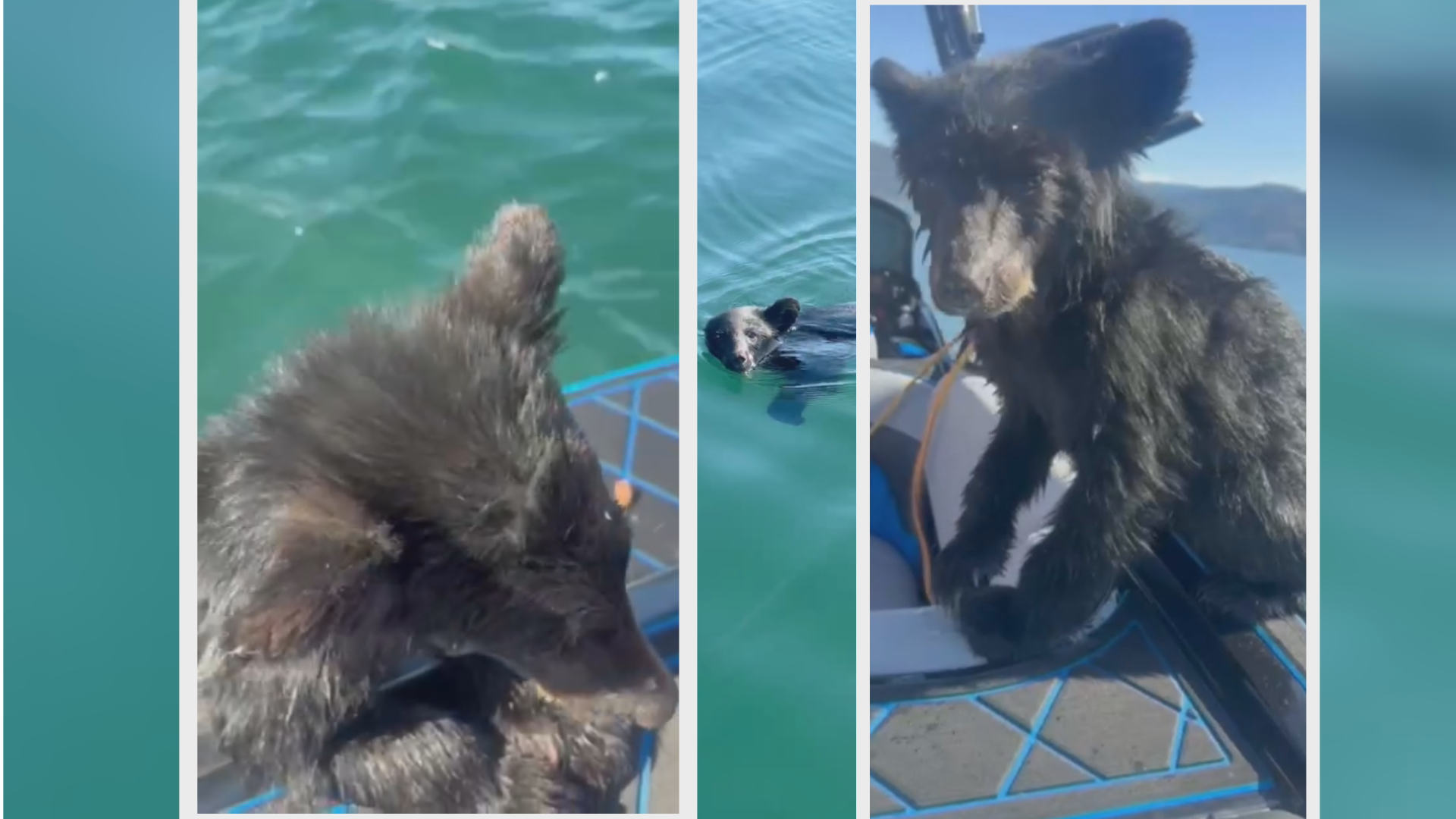
Picture yourself cruising on a boat when you spot a tiny, exhausted animal drowning in the middle of a massive lake. That is exactly what happened to Christina Zamniuk and her family on Okanagan Lake near Vernon. They saw a young black bear struggling to stay afloat, its nose dipping beneath the surface, bubbles forming as its back legs stopped moving entirely.
They did what any decent human would do. They hauled the tired animal onto their boat, saved its life, and affectionately named it Boo Boo. But what should have been a heartwarming rescue quickly devolved into a frustrating bureaucratic nightmare.
Instead of stepping in to help, local conservation authorities allegedly instructed the family over the phone to shove the animal back off the boat and onto the shore once they reached land.
The Problem With Wildlife Phone Advice
When you pull a 30-pound wild animal out of a freezing lake, you expect wildlife professionals to show up. You don't expect a quick phone call telling you to ditch the animal right back where it came from.
Zamniuk was told by officials that it wasn't a public safety issue, which meant they weren't sending anyone out. They advised her to let the bear go on its own, suggesting it would be fine. But conservation protocols that brush off vulnerable wildlife often leave everyday citizens holding the bag of moral responsibility.
The family felt entirely conflicted. They didn't want to abandon a terrified cub, yet they were following direct instructions from authorities. They eventually released Boo Boo near Chief Saddlemen Road in the Parker Cove area off Westside Road, watching the little guy wander back into the woods alone.
Why a Thirty-Pound Cub Faces Imminent Danger
Survival math in the wild is brutal, and for a small bear cub, the numbers do not add up.
Wildlife experts at organizations like the Northern Lights Wildlife Society know this reality all too well. Angelika Langen pointed out that a bear cub needs at least 50 pounds of body weight to survive a harsh winter hibernation. At roughly 30 pounds, Boo Boo was severely under-resourced.
- Winter requires massive fat reserves to sustain core body temperatures.
- Foraging for food becomes exponentially harder as temperatures drop in the Okanagan region.
- Small cubs on their own rarely possess the skills needed to hunt and scavenge effectively before snow hits the ground.
Dropping a 30-pound cub back into the wilderness without a mother or a rehabilitation plan is basically handing it a delayed death sentence.
The Scramble to Fix the Mistake
Once the story gained traction, the rescue community mobilized because the initial official response fell short. The Northern Lights Wildlife Society deployed a team to the Vernon area to track down Boo Boo.
Their mission is simple: find the cub, bring it into a proper shelter for the winter months, and give it a fighting chance at life until it can be safely re-released when conditions improve.
Stories like this expose a massive gap between public empathy and institutional wildlife management. When everyday boaters care more about a drowning animal's long-term survival than the agencies funded to protect wildlife, something is broken.
Keep an eye on local wildlife updates if you are in the Okanagan area, because Boo Boo's fight for survival is far from over.