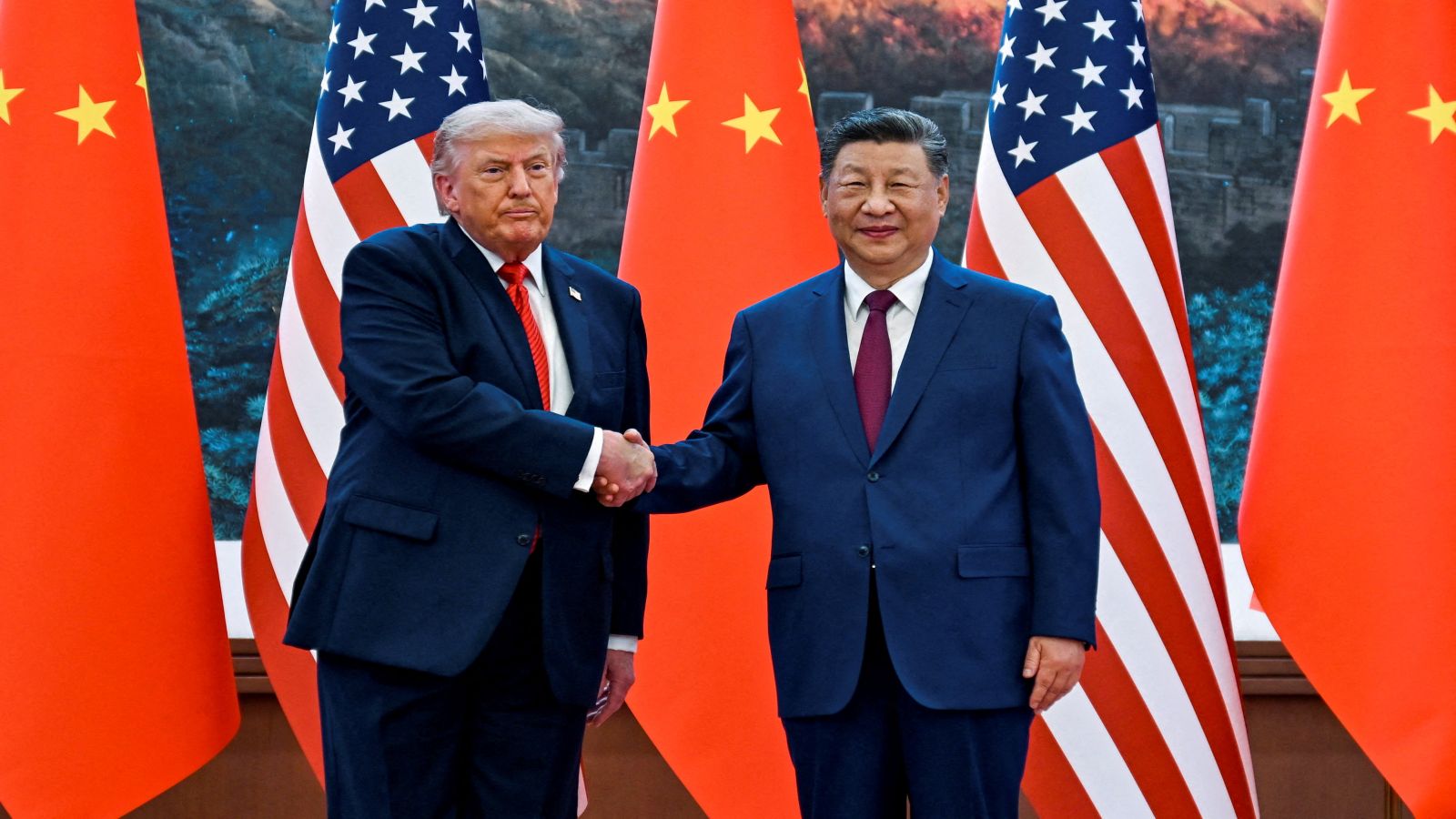
Two leaders sit across a negotiating table in Washington DC, and the entire global economy holds its breath. This isn't just another polite diplomatic handshake. Donald Trump and Xi Jinping are locking horns over trade, critical minerals, and the future of global technology. If you think this is only about keeping a fragile tariff truce alive, you're missing the bigger picture.
Beijing arrives at this summit with serious economic momentum. China's export machine is running hot, backed by a massive trade surplus, even as Washington tries to choke off access to advanced semiconductors. At the same time, the artificial intelligence race has evolved from a commercial competition into a full-scale national security obsession.
The Export Model and the Trade Reality
Trade sits at the absolute center of the agenda. The fragile tariff truce negotiated after previous talks is nearing its expiration date, and neither side wants a return to an uncontrolled escalation that could shatter global supply chains. But let's be honest about what both leaders need from this.
Trump wants a tangible win he can showcase to domestic voters. That means pushing for specific purchase commitments, particularly in American energy. Xi, on the other hand, commands an economy generating a staggering export surplus. He wants guaranteed market access and an end to aggressive U.S. restrictions, while flatly refusing to alter broader geopolitical alignments like Russian energy purchases.
Washington has tried to use tariffs and export controls as economic bludgeons. But Beijing's control over critical minerals and rare-earth refining capacity gives them serious counter-leverage. When the world's dominant manufacturing superpower meets the world's largest consumer market, compromise is mandatory, but total agreement is a pipe dream.
The Artificial Intelligence Cold War
You can't talk about modern great power competition without looking at artificial intelligence. U.S. officials and tech executives are increasingly worried about Chinese labs using model distillation—training local models on the outputs of advanced American systems. Treasury officials have openly complained about finding U.S. model watermarks inside Chinese alternatives.
Meanwhile, Chinese tech giants have accelerated domestic chip releases and model rollouts to prove that American export controls can slow them down, but they can never completely stop them. During the summit, expect both sides to discuss potential safety dialogues and emergency communication channels for national security-related cyber incidents.
Yet, don't expect either superpower to actually slow down its own development. Trump has made it clear that winning the AI race is a top priority, dismissing calls for broad regulatory slowdowns. Both nations view dominance in compute power as non-negotiable for future military and economic supremacy.
What Happens Next
Nothing about this relationship is fixed or predictable. The body language between Trump and Xi matters far more than any joint communique published after the meetings wrap up.
Expect a modest stabilization of trade lines and perhaps a working group on critical minerals or AI safety guardrails. But the structural rivalry remains completely intact. Keep a close eye on the November tariff expiration date and watch how tech supply chains adapt to ongoing export restrictions. Prepare your strategies for a permanently fragmented technological landscape.
US-China AI Race to Take Center Stage at Trump-Xi Meeting
This video provides an in-depth look at how the artificial intelligence race and trade tensions are shaping the high-stakes summit between Donald Trump and Xi Jinping in Washington.
http://googleusercontent.com/youtube_content/1