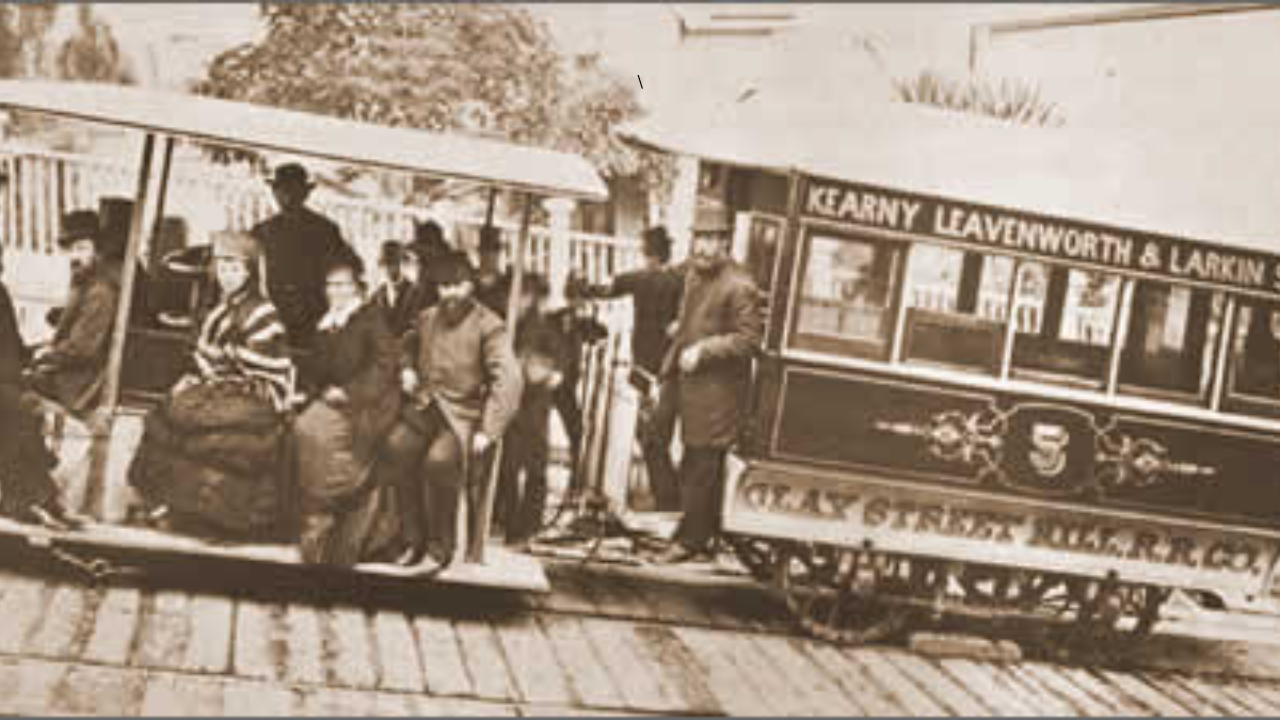
Picture a horse trying to haul a heavy passenger carriage up a street tilted at an incline of over fifteen percent. It's basically a nightmare scenario for any animal. That was the grim daily reality in 19th-century San Francisco before Andrew Hallidie stepped in. Horses slipped, fell, and sometimes died on the city's notoriously brutal hills. Something had to change, or urban expansion would stall out entirely on those steep earthen walls.
On August 2, 1873, Andrew Smith Hallidie tested a completely radical invention on Clay Street. He didn't build a steam engine or hook up a team of oxen. Instead, he dropped an endless wire rope into a subterranean tube beneath the street surface, powered by a stationary engine housed down the block. When the test car caught the moving grip and moved smoothly up the slope without a single horse in sight, it changed public transit forever. Don't miss our recent article on this related article.
The Engineering Breakthrough That Tamed Clay Street
The mechanics look simple on paper, but executing it in the 1870s took serious grit. Hallidie used a steel wire rope measuring three inches in circumference and stretching 11,000 feet long. This cable ran continuously through iron tubes supported by sheaves. A slotted opening at the top of the tube allowed a mechanical grip attached to the car to reach down, grab the moving cable, and pull the vehicle forward at a steady six miles per hour.
Passengers boarding at Kearny and Clay streets experienced a ride unlike anything else available at the time. The route climbed 307 feet over a 5,197-foot run, featuring a punishing maximum grade of 1 in 6.15. Operators could smoothly engage or disengage the grip to stop or start the car without the jerky jolts typical of animal-drawn vehicles. The system operated for seventeen and a half hours a day, keeping departures moving every five minutes, and occasionally every three minutes during peak afternoon hours. If you want more about the background here, National Geographic Travel provides an in-depth breakdown.
How the Network Exploded Across the City
The Clay Street Hill Railroad held a monopoly for four years, but word travels fast when a business model works. The Sutter Street Railroad adopted a modified version of Hallidie's patented system in 1877. Competitors rushed in shortly after. Companies like the California Street Cable Railroad and the Market Street Cable Railway built their own lines.
By 1883, San Francisco boasted an astounding 53 miles of cable car track. Lines stretched from the Ferry Building out to the Presidio, Golden Gate Park, the Castro, and the Mission. Investors loved the reliability. Commuters loved the speed compared to walking or riding exhausted horses.
Electric streetcars eventually arrived and threatened to wipe out the cable car networks entirely. Streetcars required only half the capital investment to build and maintain, and they could cover broader areas much faster. By the mid-20th century, city leaders looked at the aging cable infrastructure as an expensive relic. In 1947, Mayor Roger Lapham pushed to scrap the remaining lines entirely, citing mounting operational costs and the rise of flexible motor buses.
The Citizen Revolt That Saved the Icons
San Franciscans didn't want to let their history go quietly. Friedel Klussmann stepped up and formed the Citizens' Committee to Save the Cable Cars. She organized rallies, rallied public support, and put Measure 10 on the ballot. Voters overwhelmingly passed the measure, forcing the city charter to mandate the preservation of the Powell Street cable car lines.
Without that grassroots push, the iconic clanging bells and gripping mechanisms would exist only in old photographs and museum archives.
Today, riding a San Francisco cable car feels less like a simple commute and more like operating a living machine from another century. Operators still rely entirely on physical strength, timing, and mechanical feedback rather than digital screens or automated braking systems. If you're visiting the city, skip the packed tourist buses. Head straight to the turnaround at Powell and Market, watch the crew manually turn the car on the heavy wooden turntable, and experience the engineering marvel that Hallidie proved possible back in 1873.


